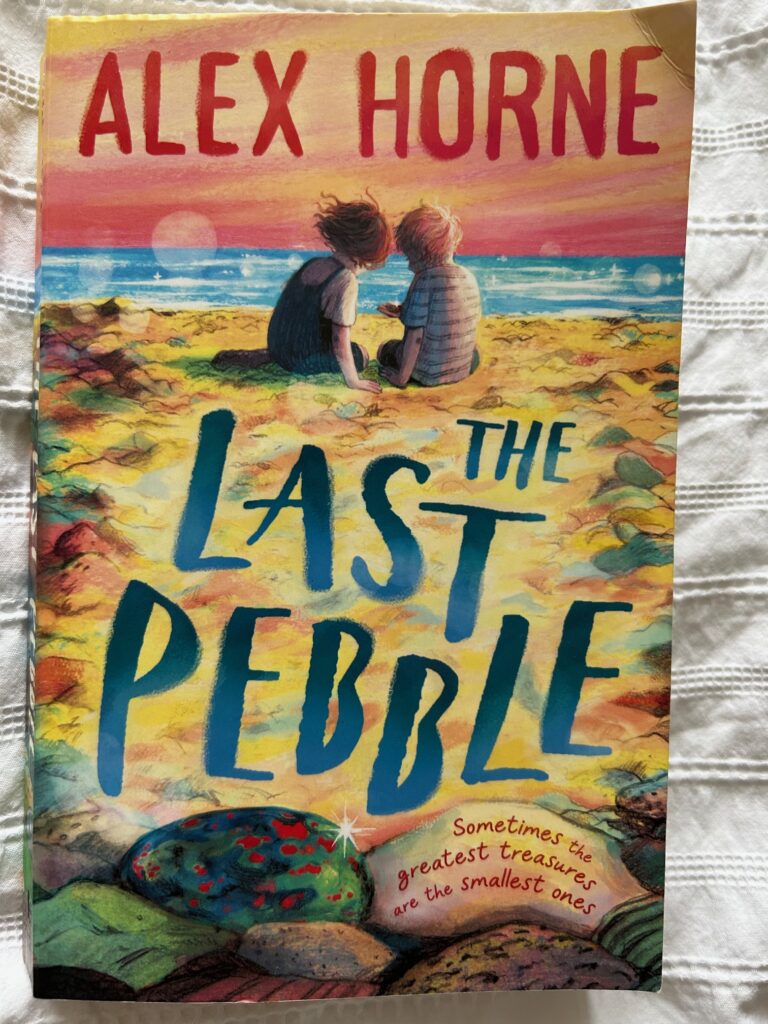
THE LAST PEBBLE – ALEX HORNE

A BIT OF CONTEXT

There are two elephants in the room with this particular book that I should address before really getting into it.

Firstly, I know the author. Alex and I work together on Taskmaster Education. This has no doubt (consciously or otherwise) influenced how I feel about the book and I probably won’t be too cutting about it, although he does encourage me to, ‘be Frank’. I look forward to the day that he remembers my actual name.

The other thing is the, “Oh, great another celebrity having a go a writing a children’s book, just what we needed” issue. The market is already pretty saturated with this happening, and it doesn’t always lead to the best storytelling and can certainly reduce opportunities and exposure for children’s authors who don’t already have a sizeable platform but do have well-written, innovative, creative, important stories to tell.

This one is a little different though. For a start, it doesn’t have lazy racial tropes and that’s always a very good thing. Also, Alex Horne can write. This is his fourth book (if you don’t count all of the Taskmaster ones – which you really could) and the first 2 were written long before he enjoyed the profile afforded to him by the success of Taskmaster. This though, is his first foray into children’s fiction. (He has written a non-fiction book with his band which is great for teaching children about music).

THE ACTUAL REVIEW

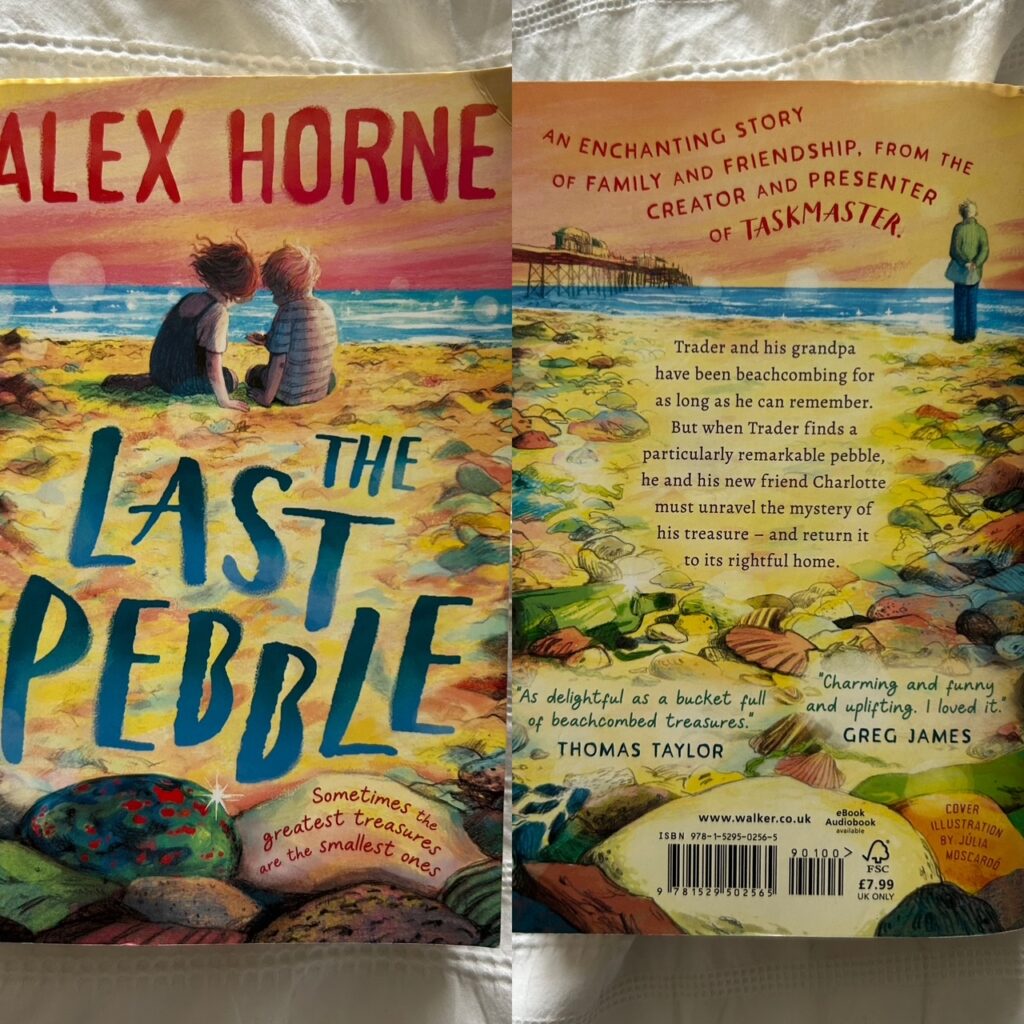
The Last Pebble is set in the seaside town of Bognor Regis, “one of the only towns with a surname”, and centres around a boy called Trader and his family. His grandmother is in a care home and his grandfather spends much of his time scouring the beach looking for interesting things – particularly precious stones. One day, whilst on the beach with his grandad, Trader spots a stone that catches his eye. He picks it up, instantly knowing that’s it’s a significant find, and then shows his grandad who confirms that he has something special. Just how special the pebble is isn’t initially obvious to the reader, but as the mystery unravels and the secrets of the stone are revealed, so the story takes shape and Trader’s life is changed forever.

The Last Pebble is a heart-warming story with a few mysterious strands that tread together nicely at the end. This meant that it led to much discussion whist reading about where the narrative might be going, what might happen to the characters and what certain clues meant. As well as a plot that twists and turns its way to a pleasing conclusion there is also good bit of geology and themes such as bullying, self-esteem, family and friendship and even a bit of morality.

This book would work as a class read in KS2, especially if they are studying ‘Rocks’ as their science topic. There are plenty of opportunities to get creative with it as well: using it as a writing stimulus (message in a bottle or the journey of the pebble to name but two); or in art lessons, practising shading and sketching the different qualities of the different stones or a spot of reverse graffiti.

We loved that it was set in Bognor because we live nearby, but really it should encourage all of us to look at the treasures all around us with fresh eyes and inspiration. You never know what gifts are hiding in plain sight.

The character of Charlotte is particularly likeable and brilliant. She is also a keen artist and bus enthusiast. Due to this love of buses, I’m sure she would love visiting the Amberley Museum, which is just up the road from Bognor. I was a little disappointed that it never got a mention but maybe that’s one for the sequel. We might have a while to wait though, as the book took 7 years to write.

In his acknowledgements, Alex notes, ‘I’m truly grateful to everyone at Walker for supporting yet another comedian who thinks they’ve got a book in them.’ On this evidence, that support was well placed and that comedian was correct.

Tom, age 12, says: “I’ve enjoyed how the character’s personalities are really different but they fit together well like a jigsaw. I really enjoyed that there was a mystery about the pebble because it’s fun to try and work it out as we read the story. My favourite character is probably Charlotte because she always has a plan. My favourite part of the book is when trader first discovers the pebble because it sets the story up well. I’d recommend this book for 8-12 year olds who like mysterious, adventurous books.”

Bella, age 10, says: “My favourite character was Charlotte because she’s very clever and she likes art. I like the book because it’s funny, like when Trader said ‘I opened my window and stuck my nose out. I couldn’t smell rain. I couldn’t feel rain. I opened my mouth – I couldn’t taste rain. It wasn’t raining!’. I like this sort of silly humour.”

Discover more brilliant books for Key Stage 2 children below…
Personal Develop through Taskmaster Club

Taskmaster Club isn’t just about fun and games – it’s a powerful tool to help schools meet their personal development objectives while giving students a safe space to explore, experiment, and grow. By taking part in creative challenges, students learn through doing, often surprising themselves with what they can achieve. Along the way, they build essential life skills that go far beyond the classroom.

Here’s how Taskmaster Club links directly to key areas of personal development in UK secondary schools:

1. Character Education

The unpredictable and often quirky challenges of Taskmaster Club encourage students to step outside their comfort zones. They learn resilience when things don’t go as planned, confidence when their ideas shine, and independence by approaching problems in their own way. For example, a challenge that requires inventing a solution from limited materials demands perseverance and creative risk-taking – valuable skills for life.

2. Spiritual, Moral, Social and Cultural Development (SMSC)

  • Moral: Many challenges require fair play, honesty, and reflection on the consequences of decisions. A simple rule-bending attempt in a task can spark discussions about ethics and responsibility. Alex might well say that, ‘all the information is on the task’, but where the letter of the law meets the spirit of the law, many a debate can be had.
  • Social: Working in teams helps students collaborate, negotiate, and respect different perspectives. Completing a task together fosters camaraderie and shows the value of collective effort, even when personalities or ideas differ.

3. Citizenship and British Values

Taskmaster Club fosters mutual respect by creating an environment where all contributions are valued, regardless of ability. Students also practise active participation by getting involved, taking turns leading, and supporting their peers – skills that transfer naturally to wider community life and civic engagement.

4. Personal, Social, Health and Economic Education (PSHE)

Decision-making and problem-solving are at the heart of every challenge. Students must quickly assess a situation, weigh up options, and put ideas into action. Whether it’s building, performing, or strategising, the process sharpens their ability to think critically and creatively under pressure.

5. Leadership and Student Voice

Taskmaster Club offers regular opportunities for leadership, whether through taking charge of a team task, volunteering ideas, or reflecting on outcomes. It also empowers student voice: everyone has space to contribute and advocate for their approach, building agency and confidence in expressing themselves.


In summary: Taskmaster Club combines fun with meaningful skill development, helping schools nurture character, teamwork, respect, decision-making, and leadership.

If you’d like to bring the joy and benefits of Taskmaster Club to your school, get in touch via info@taskmastereducation.com to find out how we can support your students’ personal development journey.

Build 21st Century Skills with Taskmaster Education

How Taskmaster Club Could Thrive in America — And How It Builds 21st Century Skills

If you haven’t yet heard of Taskmaster Club, imagine this: a group of students laughing, problem-solving, collaborating, and thinking outside the box – all while completing absurd, creative challenges like “Get this potato as far from the school as possible” or “Create the most impressive domino chain using only items in your backpack.” It’s based on the hit British TV show Taskmaster, and it’s taking educational spaces by storm.

So why might Taskmaster Club work so well in American schools, and how does it align with 21st century learning goals? Let’s dig in.


A Perfect Fit for American Classrooms

1. Humour Meets Learning

Taskmaster Club combines the joy of play with the thrill of problem-solving. Think Whose Line Is It Anyway? meets STEM Day. It’s funny, unpredictable, and totally engaging – everything teachers hope for when looking to hook students into deeper learning.

2. Built for Engagement

American educators are increasingly turning to experiential learning – project-based learning, Genius Hour, and game-based education. Taskmaster Club fits right in. It transforms school into a place where fun meets function, and learning becomes something students genuinely want to do.

3. Flexible, Scalable, and Inclusive

Whether you’re in a classroom, running an after-school program, or coordinating summer enrichment, Taskmaster Club can scale to fit your needs. It can be low-tech or tech-rich, competitive or collaborative, silly or serious. Its flexibility makes it accessible to schools across varied educational models and student demographics.

4. A Natural Ally of SEL (Social-Emotional Learning)

From managing group dynamics to learning how to handle failure with a smile, Taskmaster Club supports many SEL goals. It helps students build empathy, resilience, and interpersonal skills – traits that are essential for thriving both in school and in life.


Where 21st Century Skills Come to Life

In today’s world, content knowledge isn’t enough. Students need to master the “4 Cs” (creativity, collaboration, critical thinking, and communication), along with digital literacy, adaptability, and leadership. Taskmaster Club delivers all of these – not through lectures, but through lived experiences.

Creativity:
Every task is an open invitation to think differently. Whether students are designing elaborate contraptions or solving abstract puzzles, they’re constantly innovating.

Collaboration:
Team-based challenges teach students how to work together, resolve conflicts, and play to each other’s strengths.

Critical Thinking:
There’s no obvious right answer in most tasks. Students have to evaluate, strategize, and reflect – a perfect playground for critical thought.

Communication:
From pitching ideas to performing presentations, students practice both verbal and non-verbal communication in meaningful ways.

Adaptability & Resilience:
Things will go wrong. That’s the point. Students learn how to improvise, bounce back, and grow from the experience – key skills for navigating the real world.

Leadership & Initiative:
With rotating roles and dynamic teams, students get chances to lead, step up, and take ownership of their learning.

Digital Literacy (when tech is involved):
In schools that incorporate tech into Taskmaster tasks, students can create videos, collaborate online, or edit presentations – building modern media fluency along the way.


Final Thoughts

Taskmaster Club isn’t just fun – it’s transformative. It meets students where they are: curious, social, and bursting with energy. It nurtures the skills they need to succeed – not just in school, but in the unpredictable world beyond.

So if you’re looking for a high-impact, low-barrier way to breathe life into your teaching, Taskmaster Club might be just the challenge you’re looking for.